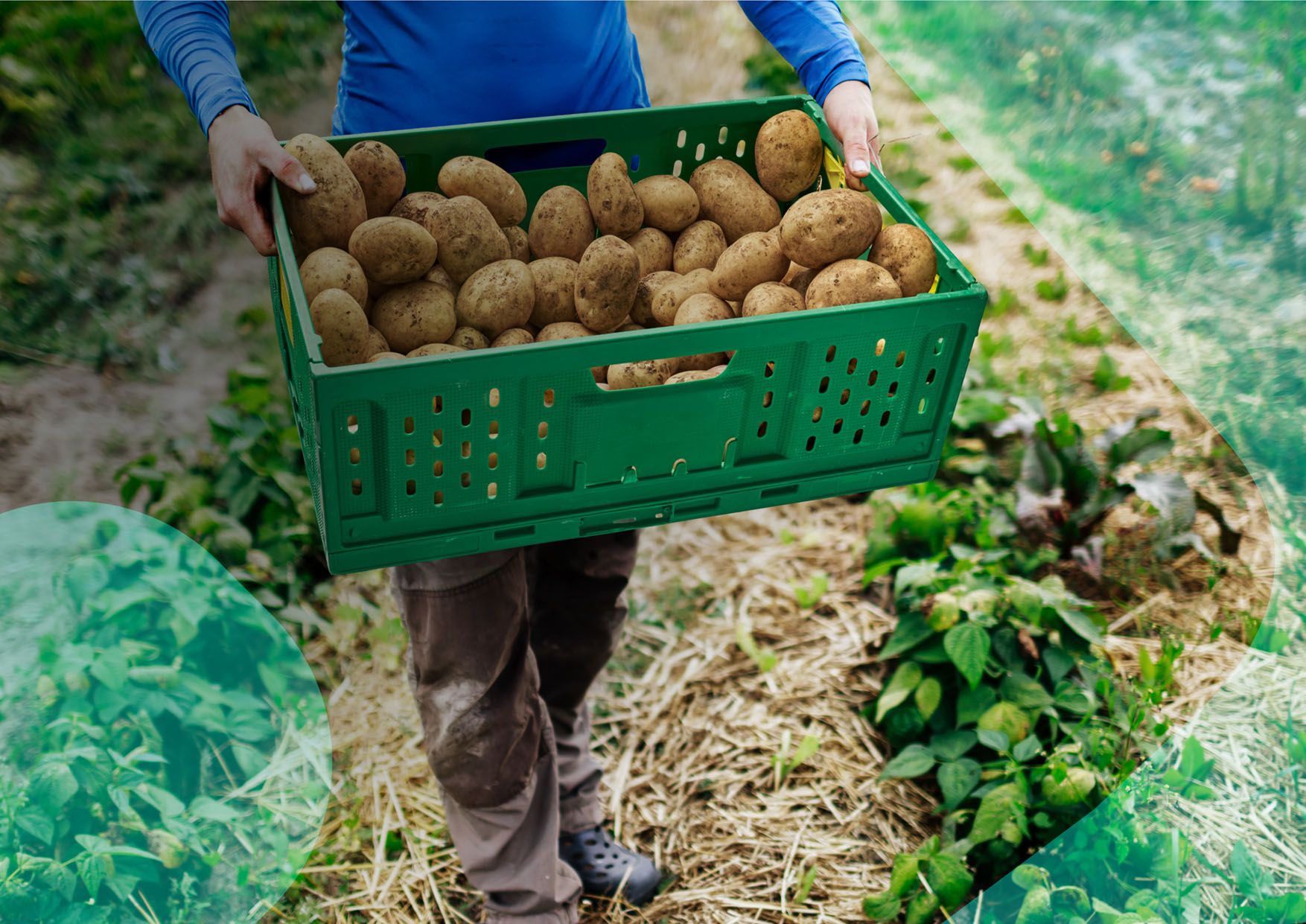
200 Million Cardboard Boxes Eliminated
News
16 May 2026

How Reusable Crates Are Supporting New Zealand’s Produce Supply Chain
More than 200 million single-use cardboard boxes have been eliminated from New Zealand’s fresh produce supply chain through the widespread use of reusable crates – highlighting the scale of impact that circular packaging systems can deliver across the industry.
Reusable crates are already a familiar part of New Zealand’s produce sector, used every day by growers, packhouses, transport operators and retailers to move fresh food from farm to supermarket. What’s less visible is the cumulative impact that this system is having on packaging waste.
Viscount New Zealand operates a national pool of 1.5 million reusable produce crates, circulating continuously across the country’s fresh produce supply chain. Each crate is designed to complete around 140 cycles during its lifespan, replacing the equivalent of 140 single-use cardboard boxes.
Together, this reusable crate pool represents the avoidance of more than 200 million corrugated cardboard boxes, demonstrating how reuse at scale can deliver measurable environmental and operational benefits.
Reuse Working at Industry Scale
According to Regan Hill, General Manager of Viscount New Zealand, the success of reusable crates shows how practical circular solutions can drive meaningful change across the broader food industry.
“Reusable packaging is one of the most effective ways to reduce waste before it’s created,” Hill says.
“When you look at the scale of New Zealand’s food supply chains, small operational improvements quickly add up to significant environmental outcomes.”
Unlike disposable cartons that are used once and discarded, reusable crates circulate continuously through the supply chain. After delivery to distribution centres or supermarkets, crates are returned, washed, sanitised and reissued back into the network – ready for the next cycle.
Hill says this model is delivering benefits beyond produce alone.
“While fresh produce has led the way, the same approach is highly relevant for sectors like eggs and poultry, where product protection, hygiene and consistency are critical. Reusable systems help improve handling efficiency, reduce damage and create a more controlled, reliable supply chain.”
Designed for High-Performance Food Supply Chains
Viscount’s reusable solutions are purpose-built for demanding food environments and engineered to optimise performance across multiple categories.
Their low-profile design allows up to 33% more empty units to be stacked per pallet, significantly improving reverse logistics efficiency and reducing transport movements.
Double smooth walls reduce water retention and support improved hygiene during washing and handling, while enhanced airflow enables up to 30% lower internal temperatures – helping remove field heat faster and maintain product quality in transit.
Ergonomic handholds and secure locking mechanisms also support safer, more efficient manual handling in high-volume environments.
Expanding Circular Solutions Across the Food Industry
Hill says the success of reusable crates across New Zealand reflects strong collaboration across the supply chain and highlights the opportunity for other sectors to adopt similar models.
“Reuse only works when producers, logistics providers and retailers work together,” he says.
“What we’re seeing now is a proven system that can extend beyond produce into other parts of the food supply chain.”
As pressure continues to grow on businesses to reduce packaging waste, emissions and supply chain costs, reusable systems are set to play an increasingly important role across New Zealand’s food and retail sectors.
“This is about preventing waste before it is created,” Hill says.
“When reuse systems are designed properly and operate at scale, they deliver better outcomes for business, for supply chains and for the environment.”
The scale of reuse now operating in New Zealand demonstrates how circular supply chain systems can move beyond theory and deliver measurable real-world impact — with the potential to transform multiple sectors across the food industry.
Find out more about Viscount and other related news
